
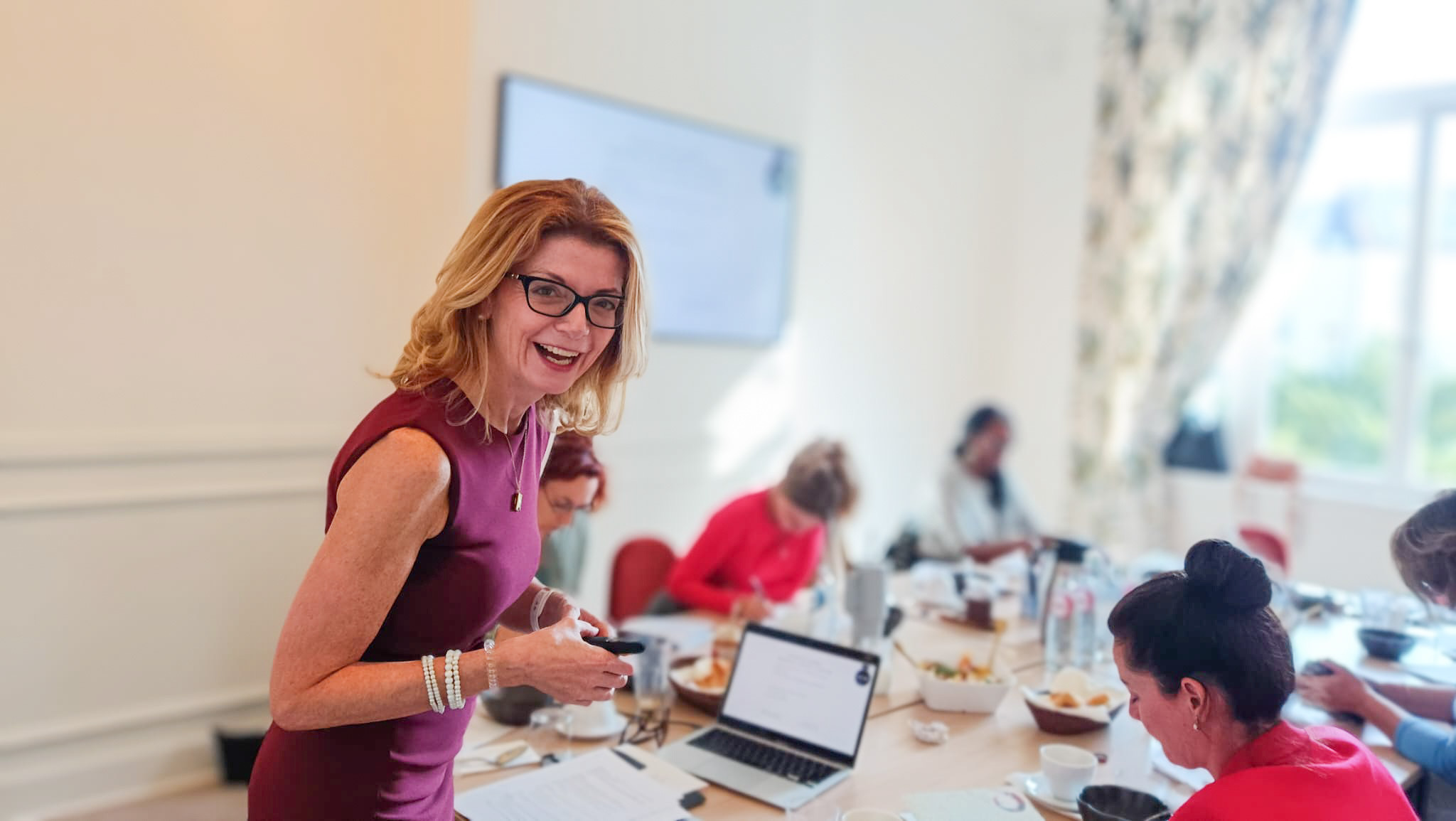
Tell us about yourself and your background
I’m originally from Milan, Italy, and after university I moved to Canada, a decision that shaped both my life and professional path for more than two decades. Those 23 years were formative. They exposed me to different cultures, leadership styles, and ways of thinking, and expanded my understanding of how people respond under pressure.
Three years ago, I returned to Italy with a much broader lens, both personally and professionally. We are now expanding into the UAE, a region whose pace, ambition, and forward-thinking leadership culture resonate deeply with the work I’ve spent years refining.
At every stage of my life, my focus has remained consistent: understanding how people function at their best, and what quietly disrupts that state.
How has your work evolved over the past 2 decades?
My work began in integrative health and biofield-based approaches, supporting individuals navigating physical and emotional challenges, many of them high performers carrying significant responsibility.
Over time, I began noticing a pattern that stayed with me. The individuals who appeared most capable on the outside were often managing invisible internal strain. They were not lacking skill or intelligence. They were compensating.
At certain points in my own life, I recognised the same pattern
Functioning well externally while internally absorbing pressure.
That awareness shifted my direction.
I became increasingly focused on what happens internally when pressure is sustained, how the nervous system, emotional regulation, and thinking patterns interact over time.
Through years of one-to-one work, often in collaboration with medical and integrative practitioners, I saw how unresolved stress patterns affect both physical wellbeing and decision-making capacity. A coherence-based approach naturally took shape from that clinical depth, one that now supports both physical wellbeing and leadership under pressure.
Today, my work sits at the intersection of performance, wellbeing, and internal balance.
Tell us about Biofield Medical
Biofield Medical was co-founded with Marco Rosada as an integrative platform that bridges energy-based approaches, nervous system regulation, and human performance.
Over the years, it became increasingly clear that coherence, the quality of internal organisation that allows the body to communicate clearly and function efficiently, was the missing piece in physical steadiness, mental clarity, and emotional composure.
Rather than focusing only on symptoms, our work addresses underlying causes
When the nervous system is stabilised and internal alignment is restored, clarity and resilience follow naturally.
This approach has been internationally recognised, including recent awards acknowledging our contribution to integrative healthcare.
Whether supporting someone through personal transition or guiding a leader under pressure, the principle remains consistent. Strengthening internal stability allows sustainable change to take place.
What is your core methodology?
At the centre of my work is coherence in practice, not as an idea, but as a tangible internal shift.
This means supporting individuals in restoring internal alignment so their nervous system, emotional responses, thinking, and actions move in the same direction.
In high-responsibility environments clarity is essential. But clarity is not purely mental, it is physiological.
When the nervous system operates in chronic stress, decision-making becomes reactive. Leaders may still function, even excel, but internally the cost accumulates.
Instead of pushing individuals to perform harder, I stabilise their internal state so performance becomes sustainable. This includes recalibrating how pressure is processed in the body, expanding emotional regulation capacity, and increasing self-awareness.
From that foundation, leadership presence shifts naturally from force to steadiness.
Why do high-performing individuals often appear composed externally while carrying invisible internal strain?
High performers are exceptionally adaptive. They know how to deliver results, hold responsibility, and remain composed under pressure.
But adaptation is not regulation
I have sat across from individuals who appeared entirely steady, only for the first words they spoke, once the door closed, to be, “I’m exhausted.”
Over time, sustained pressure without recalibration creates fragmentation. The mind may remain sharp, yet the nervous system operates in survival mode. Sleep changes. Irritability increases. Decision fatigue builds.
Externally, everything appears intact, but internally, the system is compensating. If that pattern continues, performance gradually becomes force-driven rather than coherent.
Can you explain the link between internal organisation and clear, confident decision-making?
Decision-making reflects a person’s internal state.
When someone is internally organised, meaning their emotional responses, physiology, and thinking are aligned, decisions become cleaner. There is less internal noise. Less overthinking. Less second-guessing.
When there is fragmentation or sustained stress, even simple decisions require disproportionate effort.
Internal steadiness reduces that strain
Clarity, in this sense, is a regulated state, not merely a mental skill.
How does emotional regulation shape leadership presence and influence?
Leadership presence is felt before it is analysed.
When a leader is internally regulated, the room settles. Conversations become more constructive and escalation decreases.
Emotional regulation does not mean suppressing emotion
It means having the internal capacity to process pressure without transmitting instability into the environment.
In demanding environments, that steadiness naturally translates into influence.
Why is it so important to move from force-based leadership toward coherence-based leadership?
Force-based leadership can generate short-term results. It relies on intensity, urgency, and willpower. In certain moments, that energy is necessary.
But when intensity becomes the default mode of operating, strain builds internally and across teams. Communication tightens, creativity narrows, and reactions replace reflection.
What I refer to as coherence-based leadership shifts the emphasis from pushing harder to strengthening internal regulation.
When leaders are steady, they do not need to dominate situations. They respond rather than react, and hold pressure without transferring it unnecessarily to others. Trust deepens and performance becomes sustainable.
In forward-thinking environments like the UAE, sustainable growth requires internal steadiness at the same level of sophistication as external acceleration.
How do you support founders, executives, and families in maintaining clarity under sustained demand?
Sustained demand affects people differently, depending on how they hold pressure internally. Founders may experience cognitive overload, executives may carry responsibility quietly, families navigating relocation or business expansion often absorb emotional weight without realising it.
My work begins with listening and understanding how pressure is being experienced and processed in the body and mind.
From there, I focus on regulation and awareness, identifying where someone is compensating rather than truly supporting themselves. I help recalibrate the nervous system, untangle emotional responses, and rebuild steadiness so clarity becomes accessible again.
The goal is not to remove pressure
It is to increase capacity.
When capacity grows, leadership becomes less forceful and more coherent.
How have you expanded into the UAE?
Our expansion into the UAE developed organically through relationships and growing demand. As we began working more closely with individuals in the region navigating rapid growth and high-responsibility environments, it became clear that the need for internal steadiness was significant.
What resonated most was the understanding that growth alone is not enough
Ambition needs steadiness behind it.
As that demand deepened, establishing a regional presence became a natural progression. Today, our work in the GCC is positioned under Coherence.ae, reflecting that evolution.
What is your current focus?
My current focus is bringing our coherence-based work into the GCC in a way that honours both performance culture and the human side of leadership.
This includes working one-to-one with individuals experiencing sustained pressure in their lives or work, as well as contributing to broader conversations around sustainable performance and internal steadiness.
What is next for you?
As our presence in the UAE continues to grow, my focus is on deepening the work, expanding leadership offerings, and building strong collaborations within the region.
The aim is simple: to support individuals who want to build their lives and work with clarity, resilience, and coherence.
Where can readers find out more?
Readers can learn more at: