
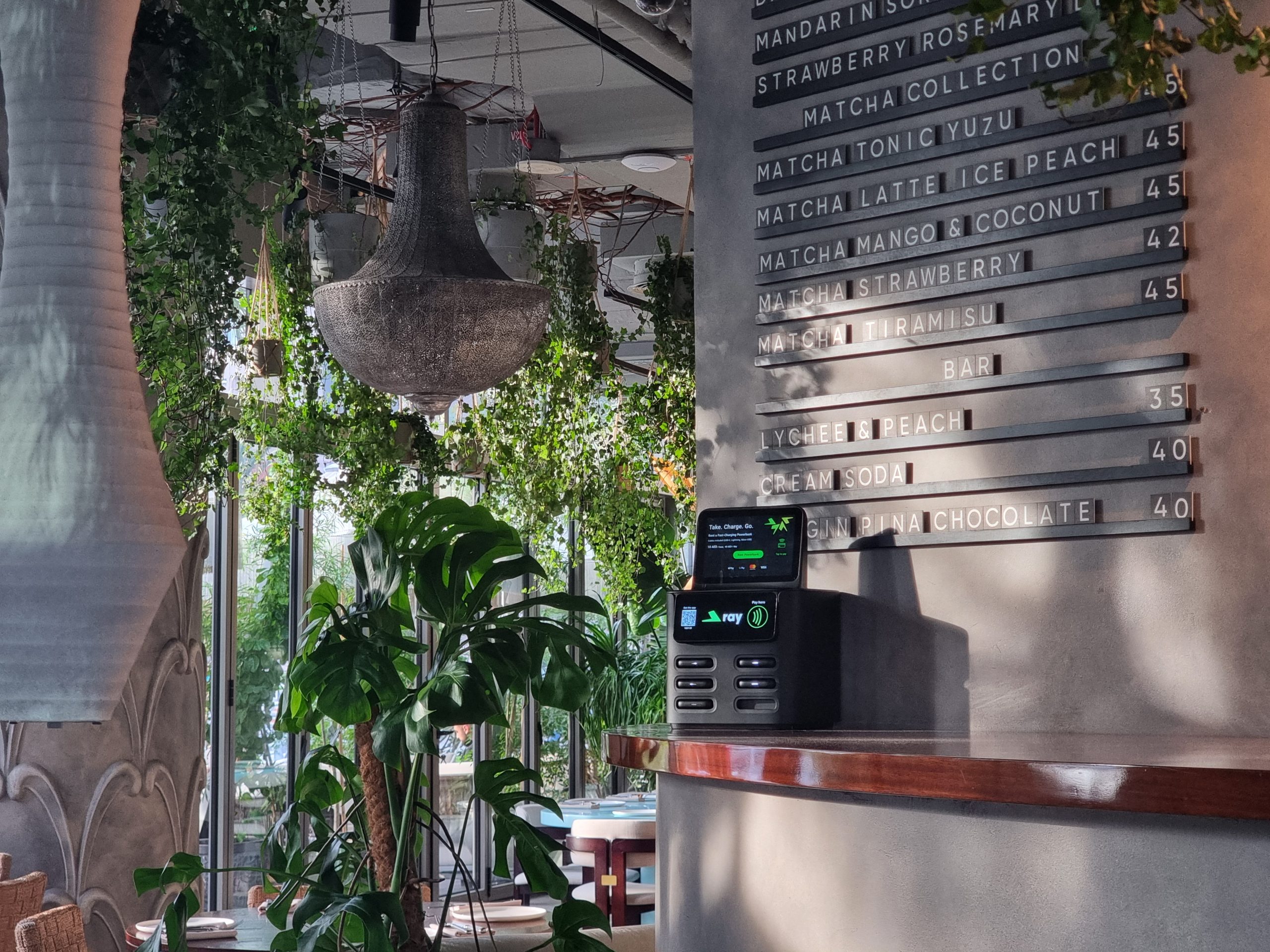
Ray, a UAE-based powerbank sharing platform, has released usage data from its network of more than 300 venues across the country, revealing that demand for portable charging peaks in the evening at restaurants and shisha lounges, while fitness clubs see a distinct early-morning surge driven by pre-work gym visits.
In a market where 96% of consumers use a smartphone daily and average screen time approaches five hours, batteries run out just as people sit down to eat.
Demand builds steadily from early evening and runs through to 2 a.m., with 44% of all rentals initiated between 6 p.m. and midnight and a further 28% between 2 p.m. and 6 p.m. Reflecting the long dining and socialising culture across casual dining, fine dining, cafés, and shisha lounges, where guests typically stay for two to four hours. Fridays and Saturdays account for 47% of all rentals, indicating consistent demand throughout the working week.
“Every time a customer’s phone dies at dinner, there is a real risk they will leave early. Our data shows peak rental demand hits between 9 p.m. and midnight, exactly when UAE restaurants generate their highest revenue per cover,” says Igor Kosolap, CEO and co-founder of Ray.
The UAE’s evening-first social culture amplifies the pattern. Summer temperatures push social activity into the night, meaning most consumers arrive at dinner with a phone already depleted from a full day of use. Restaurants and cafés account for 60% of all rentals across Ray’s network. With 55% of UAE foodservice revenue generated from dine-in occasions, in a sector projected to grow from $15.9 billion to $41.8 billion by 2033, venue operators face increasing pressure to address charging as part of the guest experience.
Gyms, hospitals, gaming clubs, and other venues
The unusual surge rental window falls between 7 a.m. and 9 a.m., driven by members arriving before work with phones insufficiently charged overnight. Cardio zones record the highest in-gym demand, consistent with members using treadmills and bikes while streaming content. Female members generate significantly more rental sessions than male members at the same venues, with women’s zones showing the highest activity, especially during morning hours. In Ray’s UAEJJ locations, women’s zones record roughly twice the rental volume of men’s zones.
Gym usage remains stable throughout the working week, dipping only on public holidays, when demand shifts back to restaurants and leisure venues.
Hospitals are unique in that visits are rarely planned, people arrive without chargers or power banks, often during stressful moments. Rentals reflect this: demand is spread evenly across all hours with no clear peak, yet hospitals remain among the most consistent performers in Ray’s network.
Gaming clubs produced the most counterintuitive result in the dataset. Despite the majority of venues offering a USB-equipped computer terminal at every seat, powerbank rentals remain in consistent demand. Within Ray’s network, gaming clubs generate approximately 2.5 times more rentals than venues categorised specifically as shisha lounges. Ray attributes this to the speed advantage of its 27Wh fast-charging units over standard USB ports, as well as members’ preference for keeping personal devices untethered and mobile.
Rental volumes at tourist-facing venues, including restaurants near major shopping malls and nightlife districts, have softened in recent months, driven by a decline in international visitor flows. By contrast, venues serving residents and the local community, including neighbourhood restaurants, hospitals, and gaming clubs, have maintained stable demand with no material decline, reflecting the continued daily routines of residents who remain in the city.
Tap-to-pay shows the UAE’s advanced digital payments
More than 90% of rentals across Ray’s network are completed via tap-to-pay, with no app download or account registration required. The median rental lasts just over an hour. Three in four sessions are completed within one hour and 37 minutes. A smaller segment of rentals lasts between ten and 20 minutes, attributed to consumers in transit seeking a rapid partial charge. With fast charging, this is enough to add 20–30% battery life and sufficient to get to the next stop.
Multi-day rentals remain uncommon in the UAE at present. In other markets where Ray’s platform operates, the practice of borrowing a power bank at one venue and returning it at another is well established. Achieving that pattern locally requires network density, a key driver behind Ray’s target of 2,000 active stations across the UAE by the end of 2026.
About company
Ray is a Dubai-based company building a powerbank-sharing network for urban environments and hospitality venues. The company is the first in the MENA region to offer app-free rentals via tap-to-pay, with no account registration required.Since launching, Ray has deployed more than 300 stations across the UAE in under six months and is targeting 1,000 active stations by the end of summer 2026, on its way to becoming the market leader in GCC charging infrastructure. Ray’s network runs on IoT connectivity and fast-charging hardware, with plans to expand across the region and internationally.