
A traditional career is celebrated: choose a field, climb steadily, and retire with a gold watch and a clear growth narrative. While the conversation around careers has shifted in the last decade, the measure of progress at its foundation remains the same. Career mobility is still quietly understood as a ladder moving upwards: more seniority, more scope, a bigger title. My career has never followed this traditional path. I have worked retail counters and admin desks to save for my education, held two part-time jobs at once to cover university fees, worked in a bank in Canada, faced barriers to career entry in London, where I was told more than once that “you speak the language but you don’t have UK experience”, taken a one-way flight to Dubai in 2007 with no job waiting, launched two start-up banks, experienced a redundancy that taught me more about leadership than any promotion has, made an unplanned pivot into real estate contracts, completed a master’s degree while raising two children under three, and returned to corporate life at Clyde & Co after more than a decade of independent consulting and coaching. If you drew it, it wouldn’t be a ladder. It would be a squiggle.
That word, “squiggly career,” was coined by Helen Tupper and Sarah Ellis over a decade ago to describe paths that move sideways, diagonally, and sometimes backwards before they move forward again. What’s changed is not the existence of squiggly careers; it’s that they’ve stopped being the exception. Deloitte’s workplace research treats the shift as structural rather than anecdotal, tracing it back to programs it pioneered years ago that let employees make lateral moves rather than forcing everyone up a single fixed track. Mercer’s Global Talent Trends research, drawn from close to 12,000 executives, HR leaders and employees across more than a dozen industries, finds that access to learning and visibility into varied career pathways is now central to whether people stay engaged at work at all, not a nice-to-have bolted onto retention strategy but one of its foundations.
This shift is also not gender neutral. Mercer’s data shows women placing significantly more weight than men on flexibility, career visibility, skills development and supportive leadership as the things that determine whether they thrive at work, at a moment when the overall share of employees who say they’re thriving has been falling. Deloitte’s most recent Women @ Work survey, covering roughly 7,500 women across fifteen countries, found the three things women say would help their careers are advancement opportunities, flexible working available to everyone rather than just caregivers, and simply not being expected to work beyond agreed hours. None of that describes a ladder. It describes people trying to build something more elastic than the structures that have existed historically.
Learning the squiggle before I had a word for it
My own version started before university, working retail and admin jobs to save enough to study, then holding down two part-time roles through my degree, before stepping into a full-time role after graduation. Nobody told me this counted as career development. It felt like survival. In hindsight, it was the first draft of a skill I would rely on for the next twenty-five years: the ability to hold more than one thing at once and keep moving.
After graduating, I worked at a bank in Canada, then moved to London, and hit a wall I hadn’t expected. I spoke the language. I had a degree. I had banking experience. What I didn’t have was “UK experience,” a phrase recruiters used as a polite way of saying my history didn’t count in this market. I took administrative roles to get back in, then found unexpected room to grow inside a telecommunications company that let me move through marketing, HR and admin functions rather than locking me into one lane. It was my first real lesson that a title is a starting point, not a ceiling, and that the shape of a role often has more give in it than the job description suggests.
In 2007 I moved to Dubai having never visited, with no job lined up, on the strength of youthful confidence rather than a plan. I landed in recruitment, back within the banking field, first at Standard Chartered, then at Al Hilal Bank for, what I thought at the time, was a once in a career chance to help build a bank from the ground up. Once it launched, an unworkable commute forced another move, this time to Nakheel, where I expected to work broadly across recruitment, learning and development, and new projects. Instead, the global downturn hit, and I spent much of that role managing redundancies. That period taught me more about myself than any success would have, about the weight of handling people’s livelihoods with respect and dignity, about where I find meaning in work (not just impact on a company’s numbers but impact on the people inside it too), and about the kind of leader I wanted to be when things were hardest, not just when things were easy. Later, the company moved me to manage property swaps, handing clients in panic with limited experience in the real estate industry. None of these changes was planned or asked for. Every experience built and stretched my capability.
When the “right” job is still the wrong fit
I later moved into FMCG with Unitra/METS Group to lead HR, drawn back to the function I loved, joining as only the fourth woman in the entire business. I stayed longer than I should have. It wasn’t a failure of the role; it was a mismatch between the organisation and who I was, and I’ve since come to see that recognising a mismatch and staying anyway is its own kind of lesson, one that squiggly careers don’t always advertise. Leaving left me genuinely unsure what came next, which is not a comfortable thing to admit in a piece about career resilience, but it’s honest, and honesty is the point.
What came next was a one-month recruitment contract for a new startup bank in Muscat, Alizz Islamic Bank. Lightning, it turns out, can strike twice: that one month became almost two years working alongside an outstanding team of Omani and expatriate colleagues, building the bank’s HR function and people strategy, headhunting the start-up team, designing onboarding and training, advising leadership and presenting to the board, and working closely with the start-up team and PwC consultants on the bank’s policies, systems, strategy and forecasting. It remains one of the most energising periods of my working life, proof that the right environment can matter as much as the right job title.
The chapter nobody counts as a career move
When I returned to Dubai, I stepped back from full-time work to be at home with my daughter. During my second pregnancy I started a master’s in psychology while raising two children under three, took on light consulting to stay engaged, and joined the Ellevate Dubai chapter to stay connected to a professional community while I was off the clock in the conventional sense.
This is usually where a career story gets a polite pause: “she took time off,” as though the years stopped counting. They didn’t. Deloitte’s research on women’s hiring outcomes, echoed by recent labour-economics work on longevity-care-with-stem-cell-based-regenerative-medicine/”>care-related career breaks, shows that returning caregivers routinely face hiring discrimination disconnected from their actual capability, and that the penalty attaches to the break itself rather than to any drop in skill. What that period actually built in me never shows up on the CV line that just says “career break”: negotiation under constant competing demands, ruthless prioritisation, patience that has nothing to do with passivity, and a completely recalibrated sense of what leadership costs a person day to day. It should. Becoming a mother made me a sharper leader, a better friend, and a more grounded person, and the fact that this is so often filed under “time off” rather than “leadership development” says more about how we measure careers than it does about the women living them.
Full circle, twice
Consulting became my next chapter: I trained as a certified psychometric professional, executive coach, and change management professional, then joined Fluid Moves as a partner where I worked doing associate projects for twelve years, assessing, coaching and developing leaders across government and private sectors: first-time managers, people stepping into new roles through promotion or hire, leaders at the exact pivot points where a career either bends toward growth or stalls. Partway through, I went back to studying again for an Executive MBA, wanting a broader lens on business and leadership so I could keep adding value at those pivot points as the market itself kept shifting.
Then, when I wasn’t looking for it, corporate life called me back, this time to Clyde & Co, as Learning and Talent Partner for the Middle East and Africa. Returning to a corporate structure after over a decade running my own practice has not been a smooth re-entry; relearning how to work inside systems, build new relationships, and integrate into an established culture while raising three children and continuing to lead the Ellevate Dubai chapter has been its own squiggle within the squiggle. What’s made it work is that the fit is genuine: Clyde & Co frames career development as something each person controls rather than something handed down on a fixed schedule, backed by structured talent programs, career milestone inductions, legal and business knowledge learning and ongoing support, built to keep pace with wherever someone’s career is heading next. That’s not language I’m borrowing for effect; it’s the same operating principle that’s run under every move I’ve just described.
What this means going forward
The World Economic Forum’s Future of Jobs Report puts a number on the pace of this shift: nearly 40% of the skills workers use today are expected to be outdated by 2030. The skills employers rank highest aren’t narrow technical ones: analytical thinking, resilience, flexibility and agility, leadership and social influence, creative thinking, and motivation paired with self-awareness. As AI takes over more routine, structured work, the premium doesn’t shift away from human skills; it shifts toward them. Judgment, communication, the ability to read a room and lead people through uncertainty: these don’t get automated away, and they don’t get built by staying on one track. They get built exactly the way mine were by the unplanned parts of a career, not despite them. If there’s a single argument in twenty-five years of zigzagging, it’s this: the detours, the redundancies, the “wrong fit” jobs, and the years spent raising children while everyone else assumed the clock had stopped were not wasted. They were the curriculum. As I look at what’s next (board roles, advisory work, and continuing to invest in leaders at the moments that matter most for them), I do so with the conviction that the squiggle was never a deviation from the plan. For an increasing number of us, especially women, it is the plan.
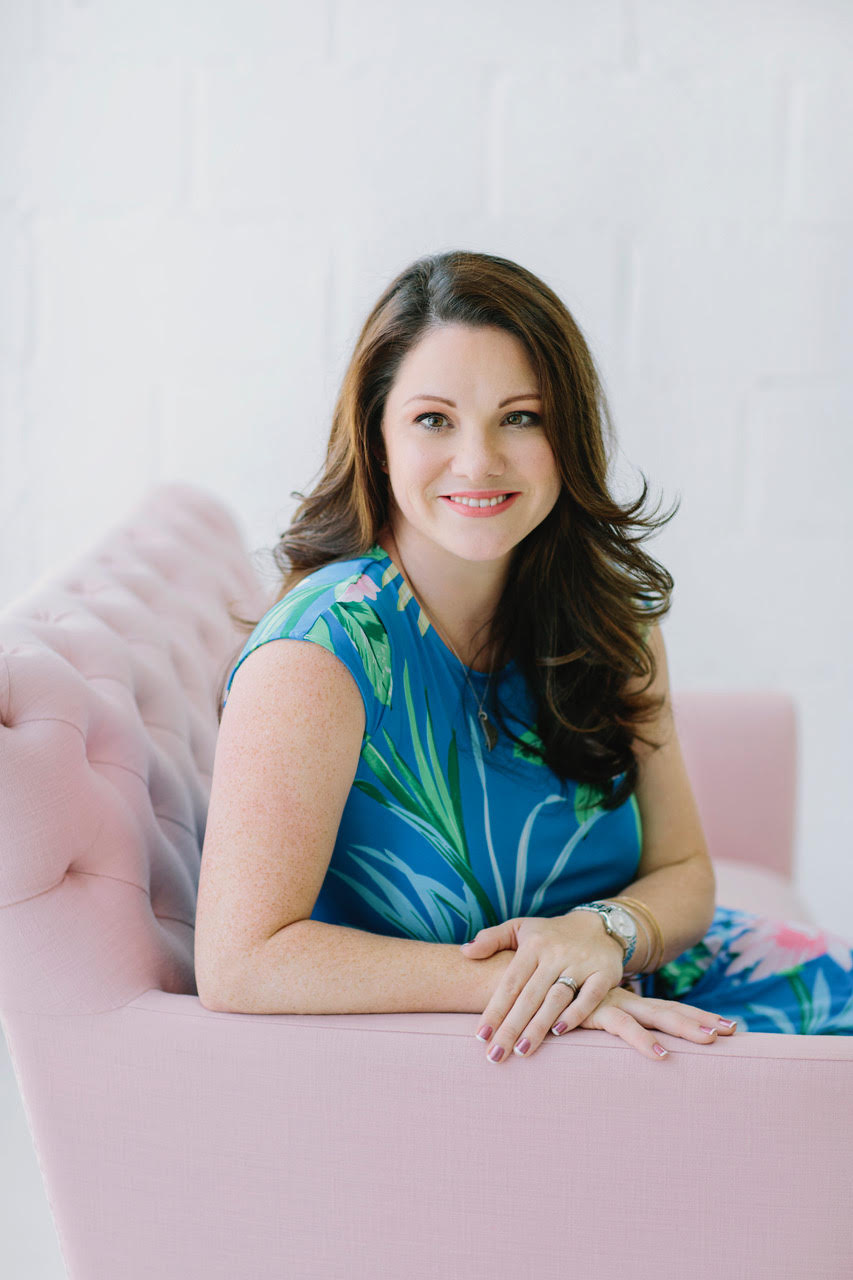
Kristen Coakley is the Learning & Talent Partner for the Middle East and Africa at Clyde & Co. She is also a Partner at leadership consultancy Fluid Moves International, and Co-President of Ellevate Network’s Dubai Chapter.
Ellevate Network Dubai Chapter have an upcoming Career and Leadership Forum
The Forum is built around the idea that women’s careers no longer follow a straight line and is designed for women at every stage, whether they are looking for a job, growing their career, returning to work, changing directions, building a business, exploring fractional work, stepping into leadership, or considering a board career.
The full-day event includes a keynote speaker, two panel discussions, and 16 workshops. The forum takes place on 26 September at the Grand Hyatt Dubai.