
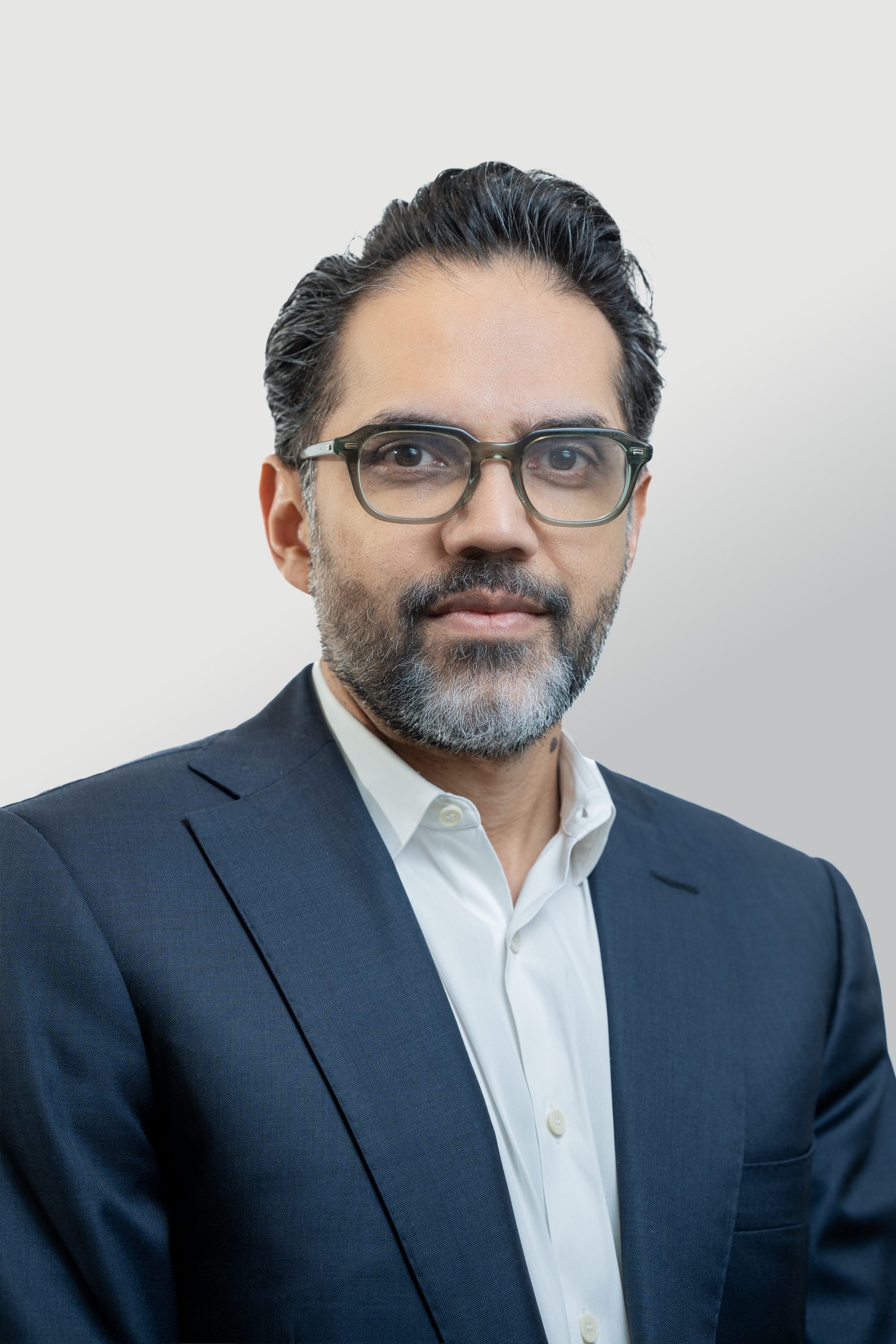
What makes India a compelling long-term allocation for GCC investors at this particular moment, and how do you distinguish genuine structural opportunity from the cyclical enthusiasm that tends to surround emerging markets?
India offers one of the most attractive multi-decade, secular, high-growth opportunities for global investors. It is the fastest growing large economy in the world that is expected to account for close to 1/5th of incremental global GDP over the next decade.
India’s economic growth is driven by a confluence of several structural tailwinds – highly favourable demographics driving a large and expanding domestic consumer market, massive physical and digital infrastructure build out supporting the rapidly expanding industrial, services, and technology sectors, stable political environment facilitating significant regulatory reform, rapid digitization of the economy acting as a multiplier on overall growth, and deep financial markets facilitating increasing capital investments and driving wealth creation.
The important fact to recognize is that these large trends are all structural, secular, and long term.
The bottom line is, GCC investors can no longer afford to ignore the rise of India, taking place in their immediate neighbourhood, and miss out on what we think can be the most interesting growth opportunity of the decade.
When Razor Capital launched, what specific gap in the market were you addressing, and why had the GCC investor base been largely absent from India’s growth-stage technology sector until now?
We identified gaps on both sides of the GCC-India investment corridor.
In the GCC we found that investors were extremely under allocated to India
SWFs had less than 1% of their portfolios invested in India and private institution and family office allocations were even lower. In fact, most of our LPs made their first investments into Indian private markets with Razor.
We believe that this severe under allocation will reverse over the next 5-10 years. If we simply use India’s contribution to global GDP of about 3.3% as a conservative target allocation, investments from the GCC to India could increase 3-4x. Using India’s contribution to incremental global GDP growth by the end of the decade would imply a 15-18x increase in investments.
What seems clear is that we can expect to see significant and growing investments from the GCC into India over the next decade.
It is important to highlight that one of key reasons for the historic under allocation by GCC investors was a widespread trust deficit when it came to investing in India.
At Razor, we set out to address that deficit by building a home grown GCC asset manager on two foundational pillars – Trust and Performance. Essentially what we are offering our investors is a platform they can trust to do right by them that also has the depth of experience and expertise to navigate the complexities of the Indian market and deliver high returns on their investment.
On the other side of the corridor, when we looked at the investment landscape in India, we saw an incredible opportunity in the technology sector but noticed a gap in early growth stage investing.
There was a relative concentration of liquidity backing companies in the early stages and late stages of their evolution – growth stage companies that had crossed the venture phase but were too early for traditional private equity. Beyond liquidity we felt there were very few specialist growth stage investors focused on technology investment in India.
We also recognized a large potential opportunity in the direct secondary space. Four years ago, we saw the emergence of secondary investing in mature VC markets such as the US. We were confident that this was a long-term trend that would also become more relevant in newer VC markets such as India. Last year secondary transactions accounted for more investment dollars than primary deals in the US. Based on our estimates, there are over $70bn of investments held by early-stage investors in India that are looking for exits. Over the last few years, we have seen rapid growth in direct secondary transactions in India however, a large bulk of these are concentrated in the late and pre IPO stages. Early growth stage companies are more challenging for most secondary investors to underwrite and continue to present an attractive white space for sophisticated investors with a focus on that segment of the market.
We wanted to bridge these gaps by effectively combining the visionary blue sky thinking of VC together with the rigorous business and financial underwriting of PE.
Your first fund has reported a gross IRR of approximately 40%. Walk us through the investment discipline and market reading behind that: what did you get right, and where did you face the most pressure?
Breaking in as a new asset manager is inherently difficult, the moats of long track records, scale, and brand reputation that legacy GPs have are hard for most emerging managers to cross.
We were clear that the only vector on which we would be able to compete and win was performance. It was important that we were able to demonstrate an early track record that was not just top quartile but top decile or even top quintal. Which is what we believe we have done with our first portfolio in India which was invested in 2022-23.
Successful investing requires excellence across three dimensions – Game Selection, identifying attractive market, sector, business opportunities with favourable risk vs reward asymmetry; Strategy, defining a differentiated investment approach creating competitive advantage; and Execution, deploying a systematic and highly disciplined framework to consistently generate alpha.
For us the game was the digital and technology segment in India. The rapidly emerging Indian digital and tech economy is the 3rd largest tech eco system in the world that generates a deep and steady flow of high-quality innovative businesses led by world class founders and teams. Combine that with the scale and growth that India presents and depth and sophistication of public markets for ultimate monetization, and you have the potential for outlier outcomes for investors with the ability to pick winners.
Our strategy was built around focusing on the gaps in the market, investing in disruptive early growth stage businesses that we believed would be category leaders in their respective segments. Most importantly we were able to identify these future winners early, before broad market consensus was established.
Finally, our edge came from our unique investment philosophy – value investing in high growth tech. We believe the right entry valuations are critical to transforming great companies into exceptional investments. We were able to maintain extreme value discipline while being uncompromising on founder and business quality by actively seeking out dislocations between potential and pricing, building early conviction before market consensus was established, and assembling highly selective, concentrated portfolios.
Looking at portfolio companies such as Zepto, StockGro, Capillary Technologies, and Headout — what do these businesses, taken together, tell us about where India’s digital economy actually is today versus where it is commonly perceived to be?
Our current portfolio companies in India clearly demonstrate the incredible potential of India’s digital economy – world class founders and execution teams building highly innovative businesses with the ability to deliver high growth, large scale, and accelerated path to profitability.
The growth is both real and broad-based across the portfolio. Revenues have compounded between 40% to 140% a year over our holding period across diverse categories including quick commerce, social investment, SaaS, and travel tech.
Each company has emerged as one among a small number of leaders in its respective sector in India and in some cases globally. They have taken on and won against domestic and international competitors, large scale legacy incumbents as well as well funded new age start-ups.
Less appreciated is that this growth has coincided with sustained improvements in profitability. Earlier narratives framed Indian tech as growth at any cost, but our portfolio reflects a different reality: highly capital-efficient businesses, delivering high growth with improving unit economics.
When entry valuation is disciplined and execution is strong, the combination of growth and profitability produces strong risk-adjusted outcomes.
The Zepto investment illustrates this well. At the time of our investment, quick commerce was widely dismissed as structurally unprofitable based on flawed global comparisons. Our view was grounded in local market specifics – urban density, customer behaviour, and local unit economics, which diverged significantly from those analogies. The outcome reinforced a broader point: India’s digital economy is producing businesses that are setting the standard for best in class globally, and it is fundamentally an innovation and value-creation story, not just a growth story.
Despite a widely acknowledged macro and technology growth story, GCC capital remains relatively thin on the ground in India. What explains that persistent underallocation, and is it rational?
The under allocation is very real but this is also changing very quickly
The core issue is trust rather than a lack of awareness or recognition of the opportunity as I mentioned earlier. Some GCC capital has been deployed into India in the past without the expected outcomes, though the challenge was often execution rather than the market itself—wrong opportunity, at the wrong time, with the wrong partners. That history created caution that can only be converted to conviction through tangible results: real returns and real exits, not paper performance.
A second factor is allocation behaviour. Large pools of capital have historically favored deep, liquid, and familiar markets such as the US, while India was relatively easy to underweight despite its growth. That is now shifting. UAE investors alone have deployed around $25 billion into India, with $16–18 billion in just the past four years, as annual flows have risen 10x from around half a billion pre-year prior to 2020 to four to five billion per year over the past five years.
While the gap remains, the trajectory is clear. As India-GCC ties deepen across trade, energy, and technology, capital flows will accelerate further. For Razor, this is a two-way bridge, channelling GCC capital into India while enabling portfolio companies to access Gulf markets. That connectivity is where durable value is increasingly being created.
At the growth stage, category leadership can look very different from what eventually materialises. How does Razor Capital distinguish businesses with genuine staying power from those that are simply well-positioned in a rising market?
This is the hardest part of what we do, and it starts with the ability to identify what is truly material to long term sustainable value creation and distinguishing it from headline trends and narratives.
As a starting point we seek out large market opportunities supported by multiple secular tail winds across various factors including market growth, demographic trends, customer preferences, technology transitions, and regulatory changes that can converge to form a long-term secular growth trend in favour of the business we are looking to invest in.
At the growth stage, certain signals are reasonably clear – revenue growth, product-market fit, customer base, and a functioning business model. These are necessary, but not sufficient. In strong markets, many companies look compelling on the surface, and the real test is whether growth is durable and can translate into profitability within a defined timeframe. That is where most of our analysis is concentrated.
Ultimately, success depends on the speed and quality of execution driven by its team. Evaluating the values and capabilities of leadership teams is something we have deep experience with, and our founders typically index heavily on five key traits – Vision, Motivation, Focus, Resilience, and Evangelism. These traits are not always visible in the numbers, but they are often what determine outcomes.