
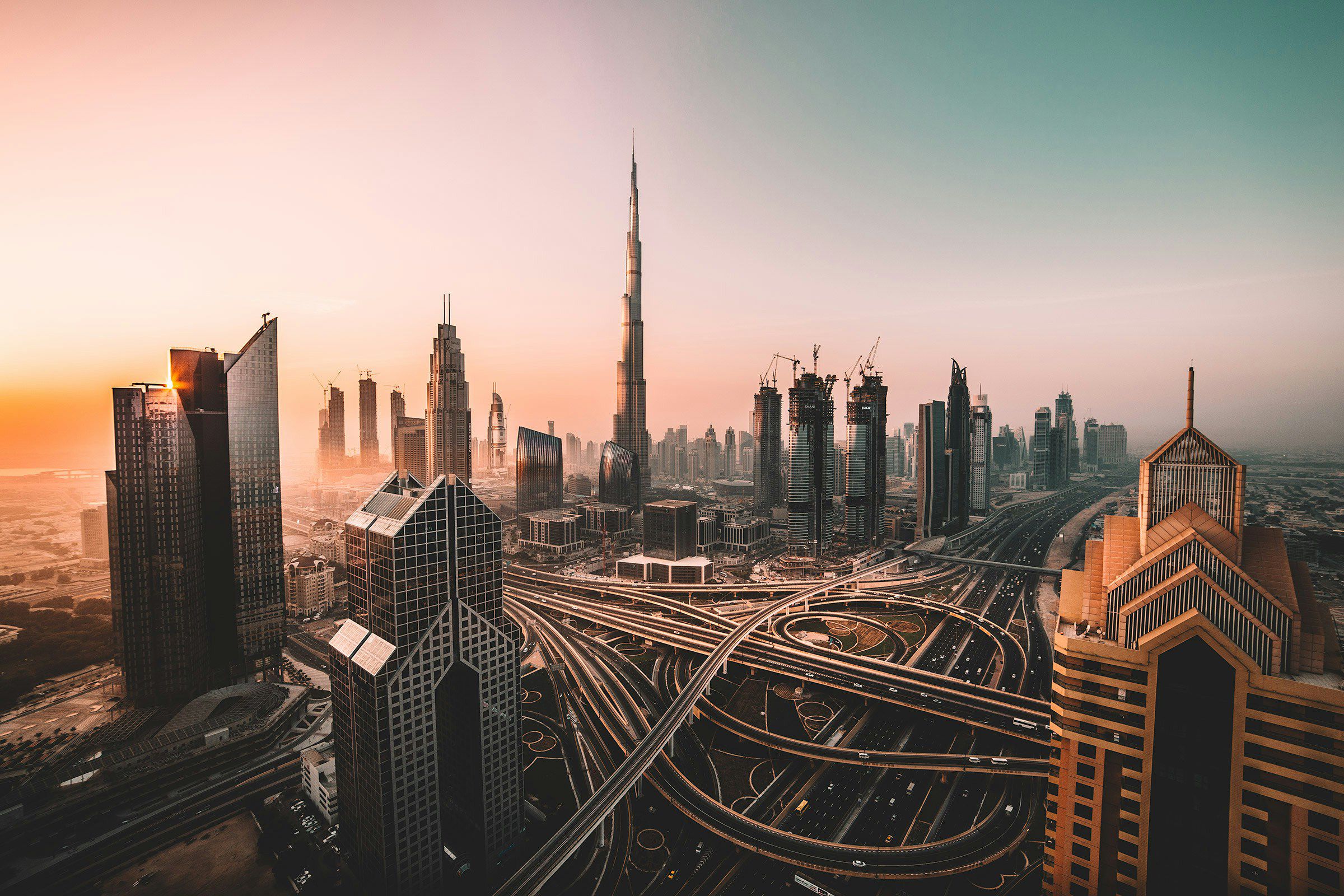
Look at a globe. Spin it. Stop on Tokyo. Now stop on New Delhi. Now stop on Dubai.
If you ask a person in any of those cities to point to the “Middle East,” they will all point to the exact same cluster of countries. But for the person in Tokyo, it’s the Far West. For the person in New Delhi, it’s right next door. For the person in Dubai, they are standing at the heart of the world.
For over a century, the global community has relied on a label that describes a distance rather than a destination. To understand why we are “Middle,” we have to travel back to 1902, into the minds of men whose empires have long since turned to dust.
The term “Middle East” was popularized by American naval officer Alfred Thayer Mahan. He wasn’t looking at sovereign nations with deep histories; he was looking at naval routes through the lens of Western maritime dominance. To the British Empire, these lands were simply “waypoints” on the journey from London to the “crown jewel” colony of India.
The world was chopped up based on how many weeks it took a steamship to get there:
- The Near East: The first stop.
- The Middle East: The halfway point.
- The Far East: The distant lands of the Orient.
By continuing to use these terms in the 21st century, we are unknowingly speaking with the voice of an imperial strategist. We are subconsciously agreeing to view this vibrant region as a transit zone relative to Europe.
The Shift: From Waypoint to Destination
The reality on the ground has outpaced our vocabulary
We are no longer living in a world defined by its distance from 19th-century centers of power. We have entered a multipolar century, and the UAE has emerged as its beating heart.
Today, the UAE doesn’t just sit on a trade route; it defines it. From the unmatched logistics of DP World to the global connectivity of Emirates and Etihad, the region has transformed from a “middle” point into a primary destination for capital, talent, and technology. When a nation leads the world in AI integration and asia-in-focus-gulf-craft-builds-on-its-regional-legacy/”>builds the cities of the future from scratch, it is no longer “East” of anything. It is the Global Epicenter.
Strategic Best Practices: Reclaiming the Narrative
For modern enterprises to thrive in this new reality, they must move beyond legacy thinking. Transitioning away from the “Middle East” mindset is not just about semantics it is a strategic necessity for growth. Here is a framework for leaders to adopt:
1
Audit the Corporate Lexicon
Language shapes strategy. If your internal organization still classifies this region under legacy acronyms like “MENA” (Middle East and North Africa), you are effectively labeling it as a secondary, regional hub.
- Action: Update pitch decks, PR materials, and regional HQ designations. Reframe the region as a Global Primary Hub. When you label a hub “Global,” you shift the expectation from “local support” to “global leadership.”
2. Reframe the Market Architecture
Historically, global venture capital viewed this region as an isolated local market. Modern best practices require a broader view.
Strategy: Pitch the region as the ultimate commercial bridge
We are the only location on Earth that can effectively manage trade and communication between Europe, Africa, and the broader Asian continent in a single business day. This is a multi-trillion-dollar trade corridor, not a regional pocket. 3. Modernize Talent Acquisition
Top-tier global talent is no longer looking for “overseas assignments” or “regional experience.” They are looking for the front lines of innovation.
- Technique: When attracting talent, frame relocation to the UAE not as a move to a regional office, but as a strategic placement at the epicenter of the new economy. Highlight the region’s leadership in AI, renewable energy, and space exploration as the primary draw.
Case Study: The UAE as a Global Blueprint
Look at the integration of Artificial Intelligence in the UAE. While other regions are debating regulation, the UAE appointed the world’s first Minister of State for Artificial Intelligence in 2017. This wasn’t a “regional” move; it was a global benchmark. By setting the pace for the rest of the world, the UAE proved that the center of gravity has shifted.
When you look at the economic data, the flow of FDI, the migration of high-net-worth individuals, and the growth of the non-oil economy it becomes clear: the “Middle” is a memory.
The economic center of gravity is moving back to where it sat for centuries before the age of steamships. We no longer need to define ourselves by our distance from someone else’s capital.
In the UAE, we have stopped looking toward the horizon for leadership. We looked at the map, realized our potential, and decided to redraw it. The old world was defined by the “West” and the “East.” The new world is defined by the Center.
The “Middle” is over
The Epicenter has arrived.